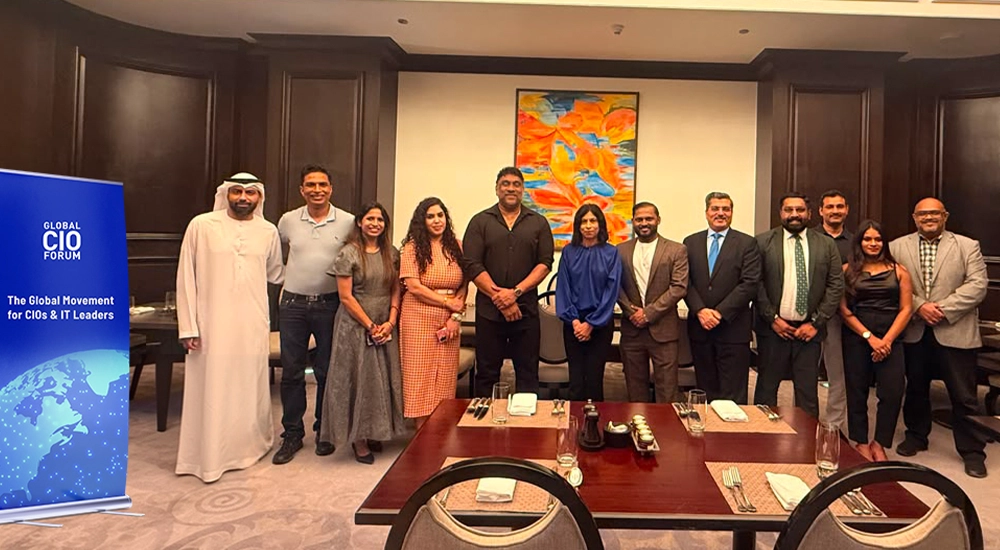

In an era of rapid technological change, organisations are rethinking how complex initiatives are planned and delivered. The focus is shifting toward structured approaches that ensure clarity, consistency, and measurable impact across execution, as reflected in the leadership approach of Shereen Faisal.
“In today’s fast-changing landscape, governance leadership has become a strategic capability rather than an administrative function.”
As artificial intelligence continues to reshape industries and redefine how organisations operate, the need for effective governance has become increasingly critical. Behind every successful AI initiative lies more than technical capability; there must be a clear structure of leadership, accountability, risk management, stakeholder coordination, and strategic oversight. In Bahrain, Shereen Faisal stands out as a governance and project management leader whose work reflects the growing importance of disciplined leadership in the age of artificial intelligence.
Delivery discipline
Shereen Faisal has demonstrated a strong commitment to governance excellence, project delivery, and organisational effectiveness. Her work focuses on ensuring that technology initiatives are not only technically sound, but also strategically aligned, well-managed, and capable of delivering sustainable value. At a time when many organisations are accelerating AI adoption, her approach emphasises that successful implementation depends on more than advanced algorithms or digital tools. It requires clear governance structures, defined responsibilities, active stakeholder engagement, risk controls, and performance measurement frameworks that guide projects from concept to deployment.
This perspective connects directly to internationally recognised project management and governance principles, particularly those reflected in ISO 21500. The standard highlights the importance of structured planning, stakeholder management, resource optimisation, governance oversight, and continual monitoring throughout the project lifecycle. These principles are especially relevant in AI-driven transformation, where projects often involve technical uncertainty, evolving requirements, data-related risks, and cross-functional collaboration.
Strategy bridge
One of Shereen’s key strengths is her ability to bridge the gap between strategy and execution. While technical teams focus on building solutions, governance leaders must ensure that projects remain aligned with organisational objectives, regulatory expectations, timelines, budgets, and stakeholder priorities. This ability to translate strategic intent into operational delivery has become a defining characteristic of modern project leadership.
To achieve this, a central part of Shereen Faisal’s professional approach is her emphasis on governance maturity as a foundation for successful delivery. In fast-moving technology environments, organisations often prioritise development speed while underestimating the importance of governance mechanisms that support long-term sustainability. Shereen’s approach focuses on embedding governance from the earliest stages of planning, ensuring that objectives, roles, risks, dependencies, decisions, and success criteria are clearly defined before implementation begins.
AI complexity
This early governance foundation is particularly important in artificial intelligence projects, where complexity extends beyond the technology itself. AI initiatives often involve large volumes of data, multidisciplinary teams, changing business needs, ethical considerations, and regulatory implications. Without structured governance, such projects can face issues related to unclear ownership, weak accountability, poor documentation, unmanaged risks, or limited adoption. Effective governance provides the structure needed to manage these challenges while maintaining alignment with organisational goals.
In practice, Shereen has continued to implement disciplined project management practices that enhance visibility, accountability, and decision-making. Through regular performance monitoring, stakeholder engagement, risk reviews, governance checkpoints, and clear reporting mechanisms, projects can be managed proactively rather than reactively. These practices help identify challenges early, optimise resources, manage dependencies, and maintain momentum throughout the project lifecycle.
Governance value
Her focus on governance extends beyond individual project execution. Strong governance frameworks help build organisational capability by creating consistency across initiatives, improving institutional knowledge, and enabling lessons learned to be carried forward. This becomes increasingly valuable as organisations scale their digital transformation efforts and manage multiple AI and technology projects simultaneously.
This wider view of governance also reflects Shereen’s understanding that structure and innovation are not opposing forces. Governance is sometimes viewed as a control function, but her approach positions it as a strategic enabler. When accountability, risk management, quality assurance, and performance measurement are clearly established, organisations are better able to innovate with confidence. This balance allows ambitious AI initiatives to move forward while maintaining transparency, trust, and operational discipline.
Global standards
As AI technologies continue to evolve, governance frameworks have also become more sophisticated. Standards such as ISO/IEC 42001 for Artificial Intelligence Management Systems and ISO/IEC 38507 for the governance implications of AI provide organisations with structured approaches for managing AI-related opportunities and risks. Shereen’s work reflects the importance of adopting governance-driven practices that support responsible innovation, transparency, and accountability.
However, successful governance is not achieved through frameworks alone. Beyond methodologies and standards, her ability to coordinate multidisciplinary teams, facilitate collaboration across stakeholders, and maintain focus on measurable outcomes is a vital part of her leadership value. In complex technology environments, projects often involve technical specialists, business leaders, compliance teams, procurement functions, external partners, and end users. Effective coordination among these groups is often the difference between a project that remains theoretical and one that delivers practical impact.
Bahrain impact
Her contribution also reflects a broader shift within Bahrain’s technology ecosystem. As the Kingdom continues to strengthen its position as a regional hub for digital transformation and emerging technologies, the demand for governance-focused leadership is increasing. Organisations are recognising that long-term success depends not only on adopting advanced technologies, but also on managing change, overseeing risk, ensuring accountability, and creating structures that allow innovation to be implemented responsibly.
In this context, Shereen Faisal represents a leader who understand that governance is not a barrier to innovation; it is one of its strongest enablers. By promoting structured project management, clear accountability, responsible AI practices, and continuous improvement, she contributes to creating environments where technology can deliver meaningful and sustainable value.
Leadership era
In today’s fast-changing landscape, governance leadership has become a strategic capability rather than an administrative function. As artificial intelligence becomes increasingly integrated into business operations, public services, and strategic decision-making, professionals who can combine governance discipline with innovation awareness will play an essential role in shaping successful outcomes.
Through her dedication to project excellence, governance maturity, and responsible technology implementation, Shereen Faisal continues to contribute to the development of a more resilient, accountable, and innovation-driven future in the Kingdom of Bahrain. In many ways, her journey reflects the future of AI leadership itself: a future where success is measured not only by technological advancement, but by the governance, discipline, and vision that transform innovation into lasting impact.